The book

An insider’s guide, written for outsiders

Most adults are expected to make decisions about loans, cards, mortgages, insurance, pensions and investments that nobody ever taught them to make. The people selling those products were taught.

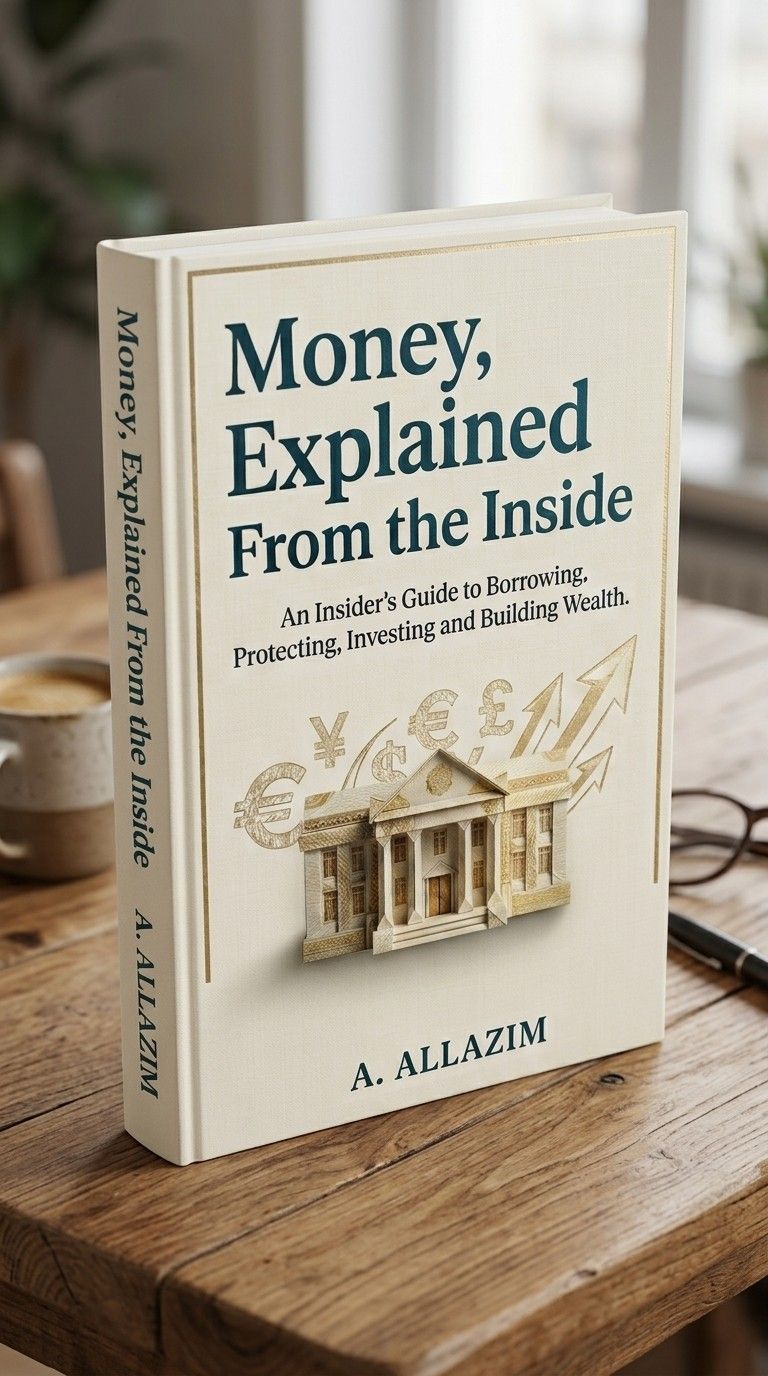
Money, Explained From the Inside by A. Allazim on a wooden table

About this book

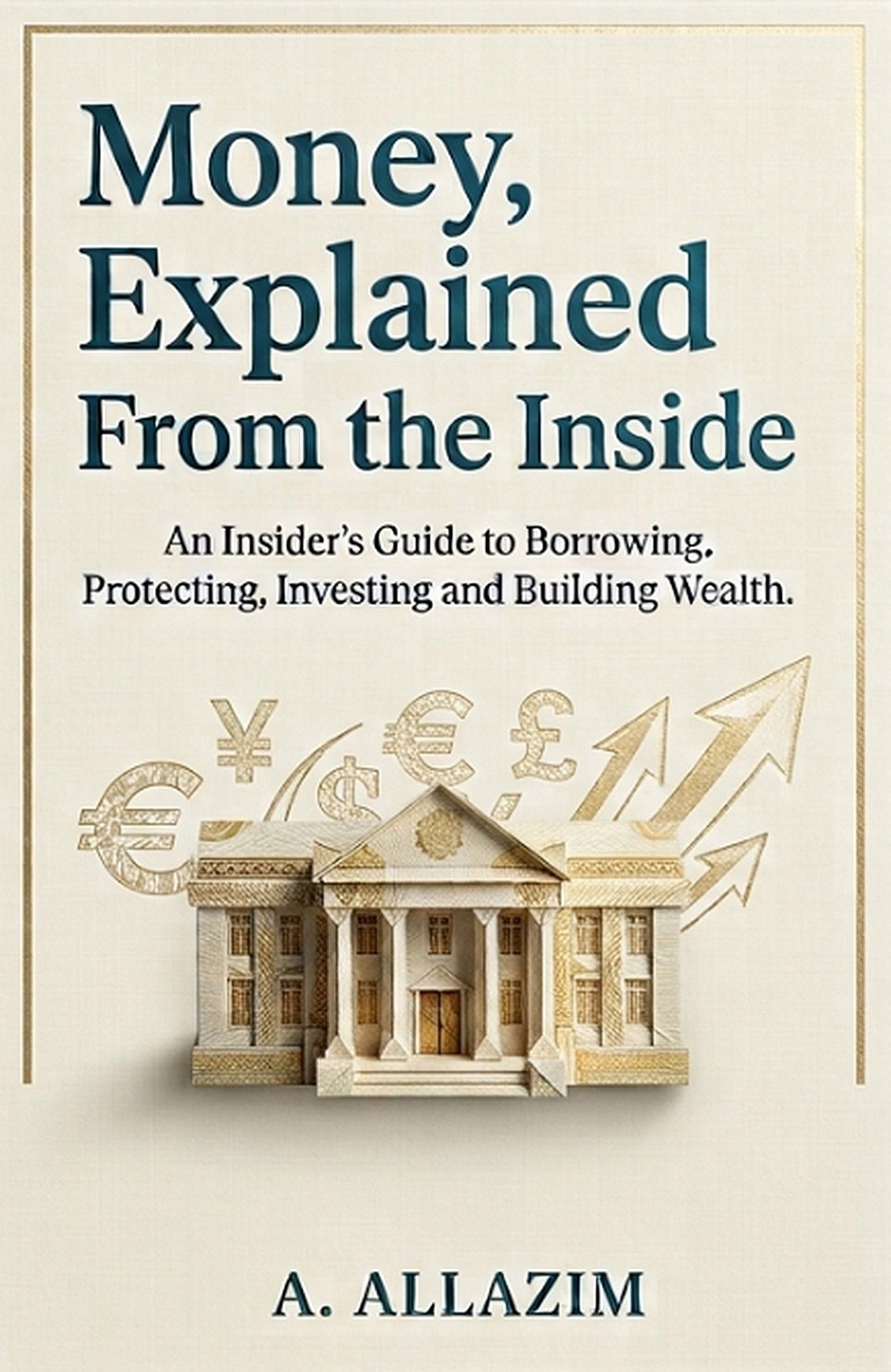
In Money, Explained From the Inside, banker A. Allazim explains how financial products really work, from the side of the desk where they are priced, sold and measured. Built around five questions to ask before any money decision, and written for readers anywhere in the world, it shows you how to:

  • See the true cost of borrowing, beyond the monthly payment.
  • Build a buffer before you need one, and know what to pay off first.
  • Insure what would ruin you, and absorb what would only hurt.
  • Recognise scams, and the sales pitch behind “advice”.
  • Invest patiently, at low cost, and stay invested when markets fall.

“Clear, evidence-based and free of hype.”

At a glance

Author
A. Allazim
Edition
First edition, 2026
Publisher
Independently published
Length
About 300 pages
Paperback
6 × 9 in paperback
Formats
Paperback and Ebook

Inside the book

Turn the pages before you buy

The Education Nobody Scheduled

Most adults are expected to make decisions about loans, insurance, pensions and investments that they were never taught to make. This book is the lesson that was never on the timetable.

Every working adult runs a small financial institution. Money arrives, some of it is committed before it lands, some is borrowed against, some is saved, and decisions are made, often in a few minutes at a bank counter or on a phone, that will shape the next twenty years.
Five questions

  1. 01
    Time

    How long does this last, and what happens to the cost the longer it runs?

  2. 02
    Cost

    What does it really cost, all in, beyond the headline number?

  3. 03
    Risk

    What could go wrong, and who is left holding it if it does?

  4. 04
    Incentives

    Who gains if I say yes, and how are they paid?

  5. 05
    Alternatives

    What else could I do with this money, including nothing?

Start with the opening, and the five questions that frame everything.

Read more of the opening →

Page previews show the book’s recurring formats using this site’s own examples. They are not scans of the printed pages.

The method

Five questions, asked of every product

  1. Time

    How long does this last, and what happens to the cost the longer it runs?

  2. Cost

    What does it really cost, all in, beyond the headline number?

  3. Risk

    What could go wrong, and who is left holding it if it does?

  4. Incentives

    Who gains if I say yes, and how are they paid?

  5. Alternatives

    What else could I do with this money, including nothing?

Contents

Six parts, twenty-five chapters

FrontBefore you begin

  1. The Education Nobody Scheduled (introduction)
  2. How to Use This Book
  3. Where You Stand

Part 1How Money Works

  1. 01
    The Language of Money
  2. 02
    The Quiet Tax: Inflation and Purchasing Power
  3. 03
    The Price of Time: Interest and Compounding
  4. 04
    Every Choice Has a Price
  5. 05
    The Mind Behind the Money

Part 2Running Your Own Finances

  1. 06
    Your Personal Financial System
  2. 07
    Resilience: Buffers, Shocks and Irregular Income
  3. 08
    Priorities: What to Do First

Part 3Inside the Financial System

  1. 09
    How Banks Actually Make Money
  2. 10
    Credit: How Lenders See You
  3. 11
    The True Cost of Borrowing
  4. 12
    Credit Cards, Overdrafts and Revolving Debt
  5. 13
    Mortgages and the Rent-or-Buy Question
  6. 14
    Making Debt Decisions
  7. 15
    How to Evaluate Any Financial Product

Part 4Protecting What You Have

  1. 16
    What Risk Actually Means
  2. 17
    Insurance: What to Protect, What to Absorb
  3. 18
    Scams, Fraud and Bad Advice

Part 5Investing

  1. 19
    From Saving to Investing: What You Actually Own
  2. 20
    Risk and Return in Practice
  3. 21
    The Cost of Investing
  4. 22
    Building and Keeping a Portfolio

Part 6From Stability to Wealth

  1. 23
    Your Largest Asset: Earning Power
  2. 24
    Retirement Across Systems
  3. 25
    Wealth, Time and Your Financial Strategy

BackReference

  1. What Financially Literate Looks Like
  2. Appendix A: The Financial Health Check (20 questions)
  3. Appendix B: Ask Before You Sign, the master list
  4. Appendix C: The Formulas, in Words
  5. Appendix D: Glossary
  6. Appendix E: Worksheets
  7. Notes and Sources

Inside every chapter

Ten kinds of box, each with one job

Every claim carries a label so you can tell what is solid from what is opinion: established fact, research finding, industry practice, general principle, author’s interpretation, illustrative example. Source notes for each chapter are collected at the back.

Illustrative case

A cast member’s situation, so the idea meets a real-feeling life.

Do the Math

A worked calculation with the key result highlighted.

Across the Desk

How the same decision looks from inside the institution.

It Depends Where You Live

A few countries compared on the same question.

Second Look

A popular belief tested, with a verdict.

Behaviour Check

A bias caught in the act.

Red Flag

A stop-and-check warning sign.

Ask Before You Sign

Questions for a bank, lender, insurer or adviser.

Try It

A 10–45 minute exercise with your own figures.

Chapter Ledger

What to remember, what to ask, what to do this week.

A companion workbook with live formulas accompanies every calculation in the book. Meanwhile, the online tools and the chapter companion let you try the same ideas with your own numbers.

Enjoyed the opening? See how the book thinks. Checklists, questions and worksheets inspired by the book, for the next time money is on the table. Part of the Reader’s Letter: a few times a year, never more.

The people in the book

Five ordinary lives, five real decisions

Their situations carry the ideas through every part of the book, and each has a case you can work through here.

Explore their cases

Before you buy

Questions readers ask

Who is this book for?

Working adults who must make decisions about loans, insurance, pensions and investments without ever having been taught how; people who have lived in more than one financial system; younger adults starting out; and anyone who suspects the product pitch is not on their side.

Do I need any financial knowledge first?

No. The book starts with the language of money and builds up, with worked examples and a companion for every chapter. It is written for people who were never taught, not for specialists.

Is it about one country?

No. It is written for readers anywhere in the world. Boxes compare how several countries handle the same question, and examples use US dollars as a neutral unit.

Does it tell me which products to buy?

No. It makes no product recommendations and gives no personal advice. It teaches you how products are priced and sold, and five questions to ask before any decision, so you can judge for yourself.

How is it different from other personal-finance books?

It is written by a banker, from the side of the desk where products are designed, priced and sold. It is evidence-based, labels every claim by how well it is established, and gives source notes chapter by chapter, with no hype.

What formats is it available in?

Paperback (about 300 pages, 6 × 9 in) and ebook, available on Amazon.

Are the tools on this website free, and are they private?

Yes. Every calculator, quiz and checklist is free and runs entirely in your browser. Nothing you type into a tool is sent anywhere.

Who is the author?

A. Allazim has worked as a Relationship Manager with American Express and First Abu Dhabi Bank, after a career in lifestyle management and hospitality, and holds a baccalaureate in economics and the International Certificate in Wealth and Investment Management (ICWIM) from the Chartered Institute for Securities & Investment.

Enter to open · Esc to close